
Al descargar el documento usted acepta los términos establecidos en el copyright del documento y la política de uso de la plataforma.
Biblioteca
A tiered approach to the marine genetic resource governance framework under the proposed UNCLOS agreement for biodiversity beyond national jurisdiction (BBNJ)

Participación Internacional
Cooperación internacional
Año de la publicación:
2020
Autor:
Fran Humphries
Hiroko Muraki Gottlieb
Sarah Laird
Rachel Wynberg
Charles Lawson
Michelle Rourke
Morten Walløe Tvedt
Maria Julia Oliva
Marcel Jaspars
Lugar de incidencia:
Global
Región oceánica:
Cosmopolita
Developing a governance framework for Marine Genetic Resources (MGRs) is a crucial element of the proposed treaty on the conservation and sustainable use of marine biodiversity in areas beyond national jurisdiction (BBNJ). Negotiating countries’ positions on MGRs, including questions on the sharing of benefits from their use, range from no regulation to elaborate infrastructure for access and benefit sharing (ABS) of all MGRs. This article proposes a Tiered Approach to MGR governance that finds a middle ground between negotiating countries’ positions on ABS and aims to foster scientific research on samples and data, protect traditional and local
knowledge, promote consistency with existing ABS frameworks within national jurisdiction and address conservation gaps including the absence of a biosafety framework. This practical activities approach to MGR governance provides an alternative to the ‘one size fits all’ approach to ABS currently under negotiation with range of governance options more suited to ABNJ’s unique environmental and geo-political conditions. These include an ABNJ Activity Notification and Monitoring System, a Facilitated Information and Sample Sharing Hub, an ABNJ Benefit Sharing System and an End-user Due Diligence approach to monitoring and benefit sharing. This...
Etiquetas:
© 2020 The Authors. Published by Elsevier Ltd. This is an open access article under the CC BY-NC-ND license
(http://creativecommons.org/licenses/by-nc-nd/4.0/).
La estructura de clasificación de la lista de especies Blue Five para la biblioteca digital ha sido
elaborada siguiendo criterios tanto científicos como de accesibilidad para facilitar la búsqueda de
información. En primer lugar, se organizaron las especies basándose en la taxonomía aceptada por la
comunidad científica para garantizar precisión y coherencia. Simultáneamente, se han implementado
categorías y subcategorías, considerando características morfológicas, su distribución y el uso de los
nombres comunes, con el fin de optimizar la navegación y búsqueda de datos por parte de los usuarios.
Esta metodología equilibrada asegura que la lista no solo sea científicamente rigurosa, sino también
fácil de consultar para quienes necesiten acceder a información específica de manera eficiente.
ISBN/ISSN/DOI:
https://doi.org/10.1016/j.marpol.2020.103910
Editor:
Elsevier/Marine Policy
Idioma:
Inglés
Fuente:
ScienceDirect
Documentos relacionados:
Participación Internacional
The likely impact of the BBNJ Agreement on the architecture...
In June 2023, governments agreed to a new treaty on the conservation and sustainable use of marine biological diversity in...
Participación Internacional
Practical policy solutions for the final stage of BBNJ treaty...
The oceans are facing a catastrophic decline in biodiversity. States are now in the final stage of negotiations for an...
Participación Internacional
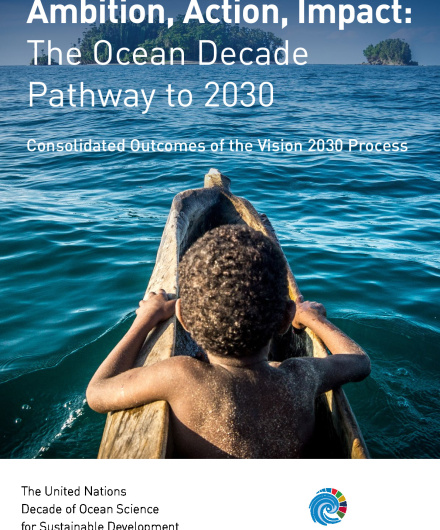
Ambition, Action, Impact: The Ocean Decade Pathway to 2030. Consolidated...
The proposal for a United Nations (UN) Decade of Ocean Science for Sustainable Development 2021-2030 (Ocean Decade) was first brought...