
Al descargar el documento usted acepta los términos establecidos en el copyright del documento y la política de uso de la plataforma.
Biblioteca
The likely impact of the BBNJ Agreement on the architecture of ocean governance

Participación Internacional
Cooperación internacional
Año de la publicación:
2024
Autor:
E. Kim Rakhyun
Lugar de incidencia:
Global
Región oceánica:
Cosmopolita
In June 2023, governments agreed to a new treaty on the conservation and sustainable use of marine biological diversity in areas beyond national jurisdiction (BBNJ). Unlike most other multilateral environmental agreements that typically emerge in response to newly identified transboundary environmental issues, the BBNJ Agreement steps into an already crowded institutional landscape as a global authority with broad objectives. The challenge facing this new legal instrument is unique. It must transform the architecture of ocean governance by harmonizing existing institutions, frameworks, and bodies (IFBs) while respecting their autonomy. This study examines the numerous references to IFBs in the treaty text to shed light on how the BBNJ Agreement might affect the dynamics with and among existing IFBs. The findings suggest that the BBNJ Agreement represents a new model for multilateral environmental agreements. It relies on its capacity to orchestrate incumbent IFBs and forge a new polycentric order centered around its treaty objectives. Its institutional power is likely to be constrained by the obligation to involve relevant IFBs in its decision-making processes. But the primary strength of the BBNJ Agreement lies in the normative authority it has established. Its objectives are...
Etiquetas:
© 2024 The Author(s). Published by Elsevier Ltd. This is an open access article under the CC BY license (http://creativecommons.org/licenses/by/4.0/)
La estructura de clasificación de la lista de especies Blue Five para la biblioteca digital ha sido
elaborada siguiendo criterios tanto científicos como de accesibilidad para facilitar la búsqueda de
información. En primer lugar, se organizaron las especies basándose en la taxonomía aceptada por la
comunidad científica para garantizar precisión y coherencia. Simultáneamente, se han implementado
categorías y subcategorías, considerando características morfológicas, su distribución y el uso de los
nombres comunes, con el fin de optimizar la navegación y búsqueda de datos por parte de los usuarios.
Esta metodología equilibrada asegura que la lista no solo sea científicamente rigurosa, sino también
fácil de consultar para quienes necesiten acceder a información específica de manera eficiente.
ISBN/ISSN/DOI:
https://doi.org/10.1016/j.marpol.2024.106190
Editor:
Elsevier/Marine Policy
Idioma:
Inglés
Fuente:
ScienceDirect
Documentos relacionados:
Participación Internacional
A tiered approach to the marine genetic resource governance framework...
Developing a governance framework for Marine Genetic Resources (MGRs) is a crucial element of the proposed treaty on the conservation...
Participación Internacional
Practical policy solutions for the final stage of BBNJ treaty...
The oceans are facing a catastrophic decline in biodiversity. States are now in the final stage of negotiations for an...
Participación Internacional
Ambition, Action, Impact: The Ocean Decade Pathway to 2030. Consolidated...
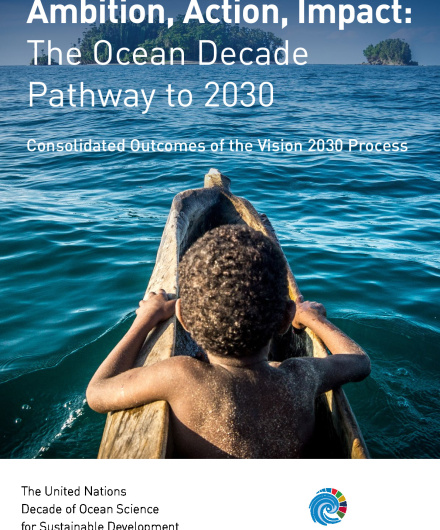
The proposal for a United Nations (UN) Decade of Ocean Science for Sustainable Development 2021-2030 (Ocean Decade) was first brought...