
Al descargar el documento usted acepta los términos establecidos en el copyright del documento y la política de uso de la plataforma.
Biblioteca
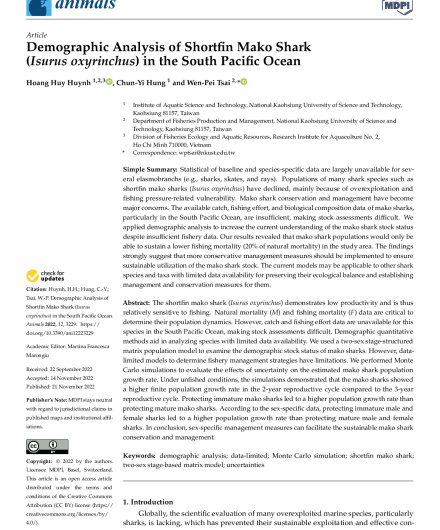
Demographic analysis of shortfin mako shark (Isurus oxyrinchus) in the South Pacific Ocean

Monitoreo de especies
Metodologías de monitoreo
Año de la publicación:
2022
Autor:
Hoang Huy Huynh
Chun-Yi Hung
Wen-Pei Tsai
Lugar de incidencia:
Global
Región oceánica:
Cosmopolita
Statistical of baseline and species-specific data are largely unavailable for several elasmobranchs (e.g., sharks, skates, and rays). Populations of many shark species such as shortfin mako sharks (Isurus oxyrinchus) have declined, mainly because of overexploitation and fishing pressure-related vulnerability. Mako shark conservation and management have become major concerns. The available catch, fishing effort, and biological composition data of mako sharks, particularly in the South Pacific Ocean, are insufficient, making stock assessments difficult. We applied demographic analysis to increase the current understanding of the mako shark stock status despite insufficient fishery data. Our results revealed that mako shark populations would only be able to sustain a lower fishing mortality (20% of natural mortality) in the study area. The findings strongly suggest that more conservative management measures should be implemented to ensure sustainable utilization of the mako shark stock. The current models may be applicable to other shark species and taxa with limited data availability for preserving their ecological balance and establishing management and conservation measures for them.
Etiquetas:
Copyright: © 2022 by the authors.Licensee MDPI, Basel, Switzerland.
This article is an open access article distributed under the terms and conditions of the Creative Commons Attribution (CC BY) license (https://creativecommons.org/licenses/by/4.0/).
La estructura de clasificación de la lista de especies Blue Five para la biblioteca digital ha sido
elaborada siguiendo criterios tanto científicos como de accesibilidad para facilitar la búsqueda de
información. En primer lugar, se organizaron las especies basándose en la taxonomía aceptada por la
comunidad científica para garantizar precisión y coherencia. Simultáneamente, se han implementado
categorías y subcategorías, considerando características morfológicas, su distribución y el uso de los
nombres comunes, con el fin de optimizar la navegación y búsqueda de datos por parte de los usuarios.
Esta metodología equilibrada asegura que la lista no solo sea científicamente rigurosa, sino también
fácil de consultar para quienes necesiten acceder a información específica de manera eficiente.
ISBN/ISSN/DOI:
https://doi.org/10.3390/ani12223229
Editor:
MDPI
Idioma:
Inglés
Fuente:
Animals
Especies mencionadas:
- Categoría Blue Five: Tiburones
- Familia: Tiburones majarros
- Especies: Tiburón mako (Isurus oxyrinchus)
Documentos relacionados:
Monitoreo de especies
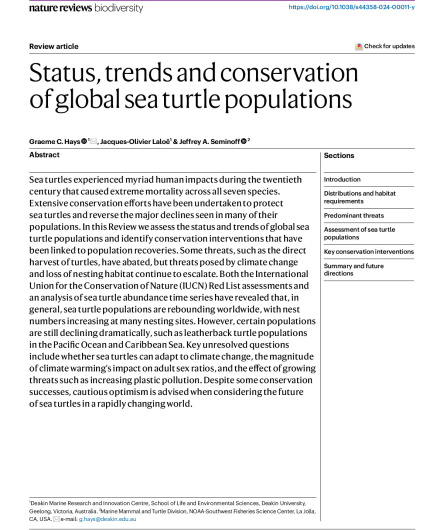
Status, trends and conservation of global sea turtle populations
Sea turtles experienced myriad human impacts during the twentieth century that caused extreme mortality across all seven species. Extensive conservation...
Monitoreo de especies
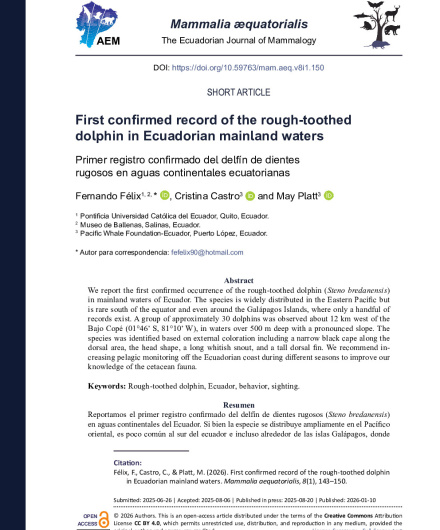
First confirmed record of the rough-toothed dolphin in ecuadorian mainland...
We report the first confirmed occurrence of the rough-toothed dolphin (Steno bredanensis) in mainland waters of Ecuador. The...
Monitoreo de especies
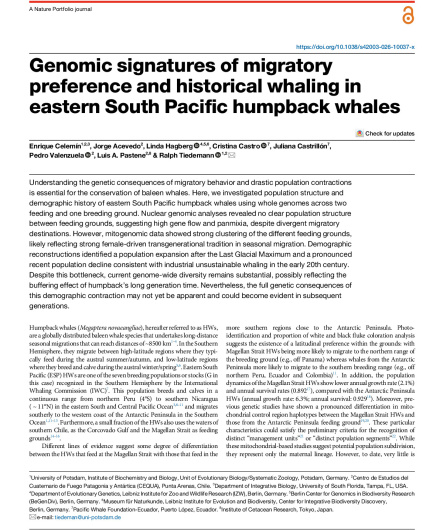
Genomic signatures of migratory preference and historical whaling in eastern...
Understanding the genetic consequences of migratory behavior and drastic population contractions is essential for the conservation of baleen whales. Here...