
Al descargar el documento usted acepta los términos establecidos en el copyright del documento y la política de uso de la plataforma.
Biblioteca
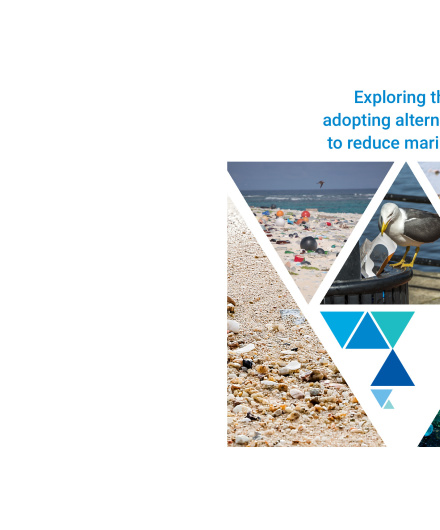
Exploring the potential for adopting alternative materials to reduce marine plastic litter

Iniciativas sostenibles
Actividades empresariales
Año de la publicación:
2018
Autor:
United Nations Environment Programme (UNEP)
Lugar de incidencia:
Global
Región oceánica:
Cosmopolita
This report aims to provide representative examples of some of the many alternative materials that are either available commercially, or are in development. It is intended to encourage entrepreneurs, ‘startups’ and established businesses - as well as researchers in the fields of materials science, engineering, agronomy and related fields – to explore more effective and sustainable products and practices. The overall aim should be to reduce society’s dependence on the unnecessary use of plastics, especially from fossil-fuel sources.
Etiquetas:
This publication may be reproduced in whole or in part and in any form for educational or non-profit services without special permission from the copyright holder, provided cknowledgement of the source is made. UNEP would appreciate receiving a copy of any publication that uses this publication as a source. No use of this publication may be made for resale or any other commercial purpose whatsoever without prior permission in writing from the United Nations Environment Programme.
Applications for such permission, with a statement of the purpose and extent of the reproduction, should be addressed to the
Director, DCPI, UNEP, P.O. Box 30552, Nairobi 00100, Kenya.
La estructura de clasificación de la lista de especies Blue Five para la biblioteca digital ha sido
elaborada siguiendo criterios tanto científicos como de accesibilidad para facilitar la búsqueda de
información. En primer lugar, se organizaron las especies basándose en la taxonomía aceptada por la
comunidad científica para garantizar precisión y coherencia. Simultáneamente, se han implementado
categorías y subcategorías, considerando características morfológicas, su distribución y el uso de los
nombres comunes, con el fin de optimizar la navegación y búsqueda de datos por parte de los usuarios.
Esta metodología equilibrada asegura que la lista no solo sea científicamente rigurosa, sino también
fácil de consultar para quienes necesiten acceder a información específica de manera eficiente.
Editor:
United Nations Environment Programme
Idioma:
Inglés
Fuente:
UNEP
Documentos relacionados:
Iniciativas sostenibles
Whale watching in northern Peru: An economic boom?
Whale-watching tourism is growing rapidly worldwide. Currently, it occurs in more than 119 countries and is estimated to produce more...

Iniciativas sostenibles
How marine plastic debris shapes tourist behavior: Willingness to return...
Marine plastic pollution poses a growing threat to tourism-dependent economies, particularly in regions reliant on pristine beach environments such as...

Iniciativas sostenibles
Whale-watching tourism as a driving force for socioeconomic development in...
We aim to analyze the socioeconomic impact of the whale-watching industry in one of the poorest areas in Ecuador. Puerto...