
Al descargar el documento usted acepta los términos establecidos en el copyright del documento y la política de uso de la plataforma.
Biblioteca
Year-round presence of Northern and Southern Hemisphere blue whales (Balaenoptera musculus) at the Galapagos Archipelago


Gestión de áreas marinas
Servicios ecosistémicos
Año de la publicación:
2023
Autor:
Judith Denkinger
Annie B. Douglas
Douglas Biggs
Richard Sears
Martin Narvaez
Daniela E. Alarcón
Lugar de incidencia:
Ecuador
Región oceánica:
Pacífico - Sudeste
Information about blue whales (Balaenoptera musculus) in the Eastern Tropical Pacific is scarce. Only a few whales have been seen in recent decades. Molecular research, photo ID and acoustic studies suggest a degree of connectivity between Chilean and Antarctic blue whales in potential breeding areas off the coast of Peru and the Galapagos, and also between blue whales of the Costa Rica Dome and Northern Hemisphere population feeding off the coast of California, though potential breeding areas are still unknown. With opportunistic sighting records in the Galapagos, group size and year‐round distribution were documented during a 17‐year period from 2001 to 2018. Sightings slightly increased during this period and 50% of the whales seen were singletons. Whales were seen year‐round. Most sightings occurred during the austral winter (82%), while calf sightings occurred from June to September. With the remaining 18% of sightings in the austral summer, we propose there is geographical overlap between equatorial Galapagos and Northern Hemisphere blue whales. One blue whale was identified in the Galapagos during February 2009, resighted in the Costa Rica Dome during January 2014, and sighted again in the Galapagos during May 2016, when whales from the Southern Hemisphere could already be...
Etiquetas:
This work is licensed under a Creative Commons Attribution-NonCommercial 4.0 International License.
La estructura de clasificación de la lista de especies Blue Five para la biblioteca digital ha sido
elaborada siguiendo criterios tanto científicos como de accesibilidad para facilitar la búsqueda de
información. En primer lugar, se organizaron las especies basándose en la taxonomía aceptada por la
comunidad científica para garantizar precisión y coherencia. Simultáneamente, se han implementado
categorías y subcategorías, considerando características morfológicas, su distribución y el uso de los
nombres comunes, con el fin de optimizar la navegación y búsqueda de datos por parte de los usuarios.
Esta metodología equilibrada asegura que la lista no solo sea científicamente rigurosa, sino también
fácil de consultar para quienes necesiten acceder a información específica de manera eficiente.
ISBN/ISSN/DOI:
https://doi.org/10.47536/jcrm.v24i1.387
Editor:
Iain Staniland Editor
Idioma:
Inglés
Fuente:
Journal of Cetacean Research and Management. Vol 24 (2023)
Especies mencionadas:
- Categoría Blue Five: Ballenas
- Familia: Rocuales
- Especies: Ballena azul (Balaenoptera musculus)
Documentos relacionados:
Gestión de áreas marinas
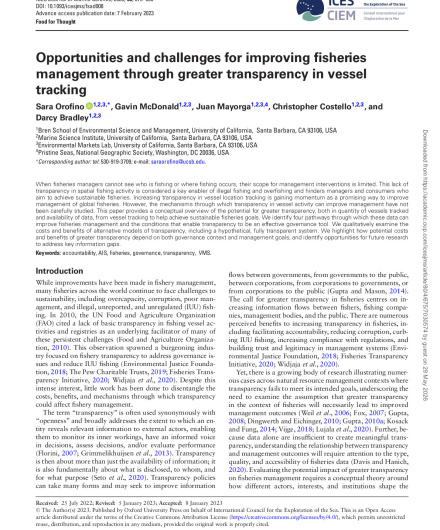
Opportunities and challenges for improving fisheries management through greater transparency...
When fisheries managers cannot see who is fishing or where fishing occurs, their scope for management interventions is limited. This...
Gestión de áreas marinas
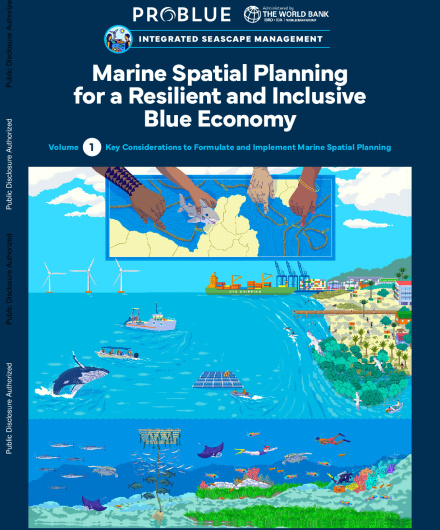
Marine spatial planning for a resilient and inclusive blue economy...
The World Bank defines the Blue Economy as the sustainable and integrated development of economic sectors in healthy oceans. It...
Gestión de áreas marinas
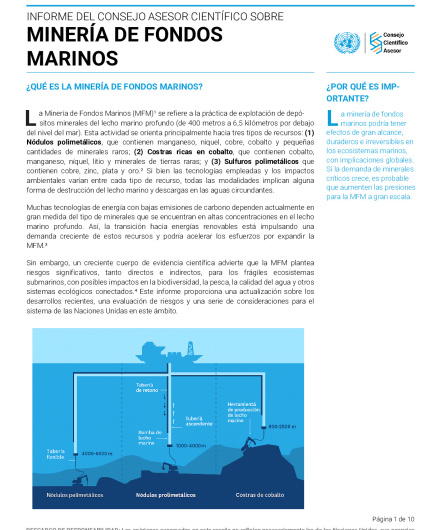
Informe del consejo asesor científico sobre minería de fondos marinos
Un creciente cuerpo de evidencia científica advierte que la MFM plantea riesgos significativos, tanto directos e indirectos, para los frágiles...