
Al descargar el documento usted acepta los términos establecidos en el copyright del documento y la política de uso de la plataforma.
Biblioteca
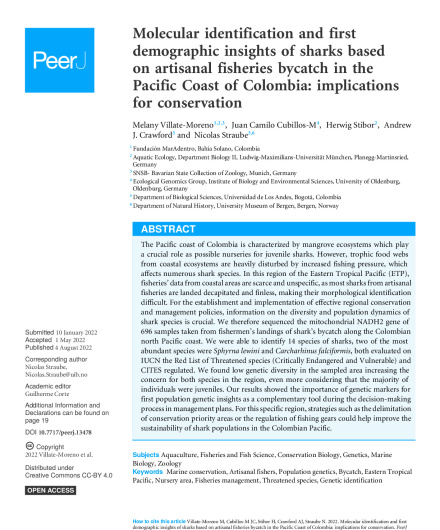
Molecular identification and first demographic insights of sharks based on artisanal fisheries bycatch in the Pacific coast of Colombia: Implications for conservation

Monitoreo de especies
Metodologías de monitoreo
Año de la publicación:
2022
Autor:
Melany Villate Moreno
Juan Camilo Cubillos M
Herwig Stibor
Andrew J. Crawford
Nicolas Straube
Lugar de incidencia:
Colombia
Región oceánica:
Pacífico - Sudeste
The Pacific coast of Colombia is characterized by mangrove ecosystems which play a crucial role as possible nurseries for juvenile sharks. However, trophic food webs from coastal ecosystems are heavily disturbed by increased fishing pressure, which affects numerous shark species. In this region of the Eastern Tropical Pacific (ETP), fisheries’ data from coastal areas are scarce and unspecific, as most sharks from artisanal fisheries are landed decapitated and finless, making their morphological identification difficult. For the establishment and implementation of effective regional conservation and management policies, information on the diversity and population dynamics of shark species is crucial. We therefore sequenced the mitochondrial NADH2 gene of 696 samples taken from fishermen’s landings of shark’s bycatch along the Colombian north Pacific coast. We were able to identify 14 species of sharks, two of the most abundant species were Sphyrna lewini and Carcharhinus falciformis, both evaluated on IUCN the Red List of Threatened species (Critically Endangered and Vulnerable) and CITES regulated. We found low genetic diversity in the sampled area increasing the concern for both species in the region, even more considering that the majority of individuals were juveniles. Our...
Etiquetas:
This is an open access article distributed under the terms of the Creative Commons Attribution License, which permits unrestricted use, distribution, reproduction and adaptation in any medium and for any purpose provided that it is properly attributed. For attribution, the original author(s), title, publication source (PeerJ) and either DOI or URL of the article must be cited.
La estructura de clasificación de la lista de especies Blue Five para la biblioteca digital ha sido
elaborada siguiendo criterios tanto científicos como de accesibilidad para facilitar la búsqueda de
información. En primer lugar, se organizaron las especies basándose en la taxonomía aceptada por la
comunidad científica para garantizar precisión y coherencia. Simultáneamente, se han implementado
categorías y subcategorías, considerando características morfológicas, su distribución y el uso de los
nombres comunes, con el fin de optimizar la navegación y búsqueda de datos por parte de los usuarios.
Esta metodología equilibrada asegura que la lista no solo sea científicamente rigurosa, sino también
fácil de consultar para quienes necesiten acceder a información específica de manera eficiente.
ISBN/ISSN/DOI:
https://doi.org/10.7717/peerj.13478
Editor:
PeerJ
Idioma:
Inglés
Fuente:
PeerJ
Especies mencionadas:
- Categoría Blue Five: Tiburones
- Familia: Tiburones cazones Tiburones martillo
- Especies: Tiburón jaquetón sedoso (Carcharhinus falciformis) Tiburón martillo común (Sphyrna lewini)
Documentos relacionados:
Monitoreo de especies
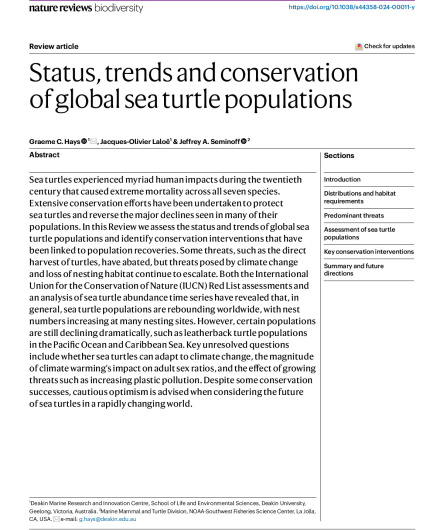
Status, trends and conservation of global sea turtle populations
Sea turtles experienced myriad human impacts during the twentieth century that caused extreme mortality across all seven species. Extensive conservation...
Monitoreo de especies
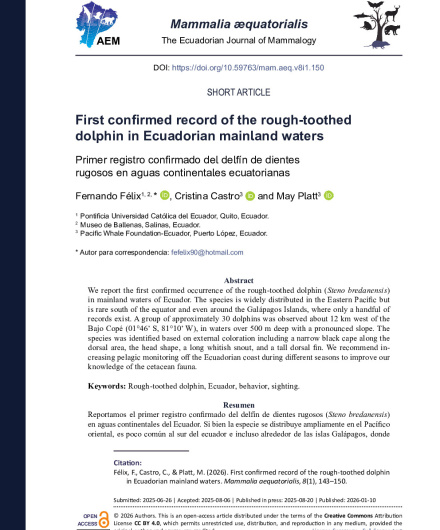
First confirmed record of the rough-toothed dolphin in ecuadorian mainland...
We report the first confirmed occurrence of the rough-toothed dolphin (Steno bredanensis) in mainland waters of Ecuador. The...
Monitoreo de especies
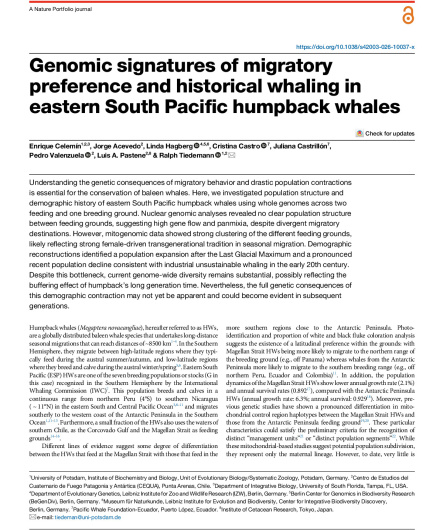
Genomic signatures of migratory preference and historical whaling in eastern...
Understanding the genetic consequences of migratory behavior and drastic population contractions is essential for the conservation of baleen whales. Here...